Monthly Calendar
Upcoming Calendar
16
Feb
Monday
3 February
St. Nicholas of JapanFast free

Holy Confession
The sacrament of reconciliation through which the faithful confess their sins to a priest and receive absolution. Also called the sacrament of repentance or penance, confession restores the baptismal purity lost through sin and reconciles the penitent with God and the Church. The penitent stands before an icon of Christ while confessing to the priest, who acts as a witness and minister of God's forgiveness. The priest then covers the penitent's head with his epitrachelion (stole) and pronounces the prayer of absolution.

All-Night Vigil
A lengthy service combining Vespers and Matins, traditionally celebrated on the eve of Sundays and major feasts. The All-Night Vigil includes the singing of "Lord, I Call," the Magnificat, the Great Doxology, and numerous psalms and hymns. This service prepares the faithful spiritually for the upcoming feast.
St. Sava of Serbia
The 13th-century prince-monk who became the first Archbishop of Serbia and organized the Serbian Orthodox Church. Celebrated on January 27th, Sava established monasteries, schools, and hospitals throughout Serbia. He obtained autocephaly for the Serbian Church from Constantinople and wrote the first Serbian constitution. He represents national and ecclesiastical independence through Orthodox faith.

Divine Liturgy
The central worship service of the Orthodox Church, celebrating the Eucharist (Holy Communion). Usually celebrated on Sundays and feast days, the Divine Liturgy consists of the Liturgy of the Word (scripture readings) and Liturgy of the Faithful (Eucharistic prayer and communion). The most common forms are the Liturgies of St. John Chrysostom and St. Basil the Great.
St. Nina of Georgia
The 4th-century apostle to Georgia who converted the Georgian kingdom to Christianity. Celebrated on January 14th, Nina was a Cappadocian woman who brought the Gospel to Georgia through her preaching and miracles. She convinced the royal family to convert, leading to Georgia becoming the second nation to officially adopt Christianity. She represents successful missionary work and women's apostolic ministry.
St. Anthony the Great
The father of monasticism who retreated to the Egyptian desert in the 3rd-4th centuries. Celebrated on January 17th, St. Anthony's feast honors his pioneering role in Christian monasticism and his spiritual warfare against demons. His life, recorded by St. Athanasius, inspired countless Christians to pursue ascetic life and deeper prayer.
St. Xenia of St. Petersburg
The 18th-century 'fool for Christ' who lived in radical poverty and simplicity. Celebrated on January 24th, Xenia gave away her possessions after her husband's death and lived as a holy fool, helping others while appearing mad to the world. She represents the path of voluntary poverty and the wisdom hidden in apparent foolishness.
Three Holy Hierarchs
The joint celebration of Saints Basil the Great, Gregory the Theologian, and John Chrysostom on January 30th. These three great Church Fathers and theologians were honored together to end disputes over which was greatest. They represent the unity of Orthodox theology, liturgy, and pastoral care. This feast is especially important in Orthodox education.
Presentation of Christ
The presentation of the infant Christ in the Temple, where He was received by the righteous Simeon and Anna the Prophetess. Also called the "Meeting of the Lord," this feast on February 2nd celebrates Christ's first entrance into the Temple and Simeon's recognition of Him as the "Light of the Nations." Candles are traditionally blessed.
Service Times
Saturday
Confessions – 5pm
Vigil - 6pm
Sunday
Divine Liturgy – 10am
All services are in English.
Father Joshua Cardoza
Phone: (541) 299-0278
Email: frjoshua@stinnocentorthodoxchurch.org
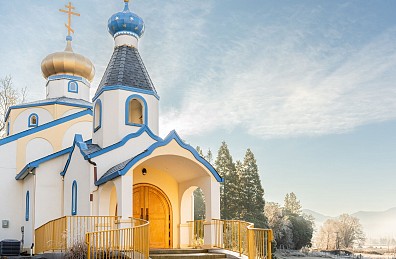
Saint Innocent Orthodox Church
4922 North River Rd
Gold Hill, OR 97525
Sat
24JanSun
25JanTue
27Jan

Holy Confession
The sacrament of reconciliation through which the faithful confess their sins to a priest and receive absolution. Also called the sacrament of repentance or penance, confession restores the baptismal purity lost through sin and reconciles the penitent with God and the Church. The penitent stands before an icon of Christ while confessing to the priest, who acts as a witness and minister of God's forgiveness. The priest then covers the penitent's head with his epitrachelion (stole) and pronounces the prayer of absolution.

All-Night Vigil
A lengthy service combining Vespers and Matins, traditionally celebrated on the eve of Sundays and major feasts. The All-Night Vigil includes the singing of "Lord, I Call," the Magnificat, the Great Doxology, and numerous psalms and hymns. This service prepares the faithful spiritually for the upcoming feast.
St. Sava of Serbia
The 13th-century prince-monk who became the first Archbishop of Serbia and organized the Serbian Orthodox Church. Celebrated on January 27th, Sava established monasteries, schools, and hospitals throughout Serbia. He obtained autocephaly for the Serbian Church from Constantinople and wrote the first Serbian constitution. He represents national and ecclesiastical independence through Orthodox faith.

Divine Liturgy
The central worship service of the Orthodox Church, celebrating the Eucharist (Holy Communion). Usually celebrated on Sundays and feast days, the Divine Liturgy consists of the Liturgy of the Word (scripture readings) and Liturgy of the Faithful (Eucharistic prayer and communion). The most common forms are the Liturgies of St. John Chrysostom and St. Basil the Great.
St. Nina of Georgia
The 4th-century apostle to Georgia who converted the Georgian kingdom to Christianity. Celebrated on January 14th, Nina was a Cappadocian woman who brought the Gospel to Georgia through her preaching and miracles. She convinced the royal family to convert, leading to Georgia becoming the second nation to officially adopt Christianity. She represents successful missionary work and women's apostolic ministry.

